You found out the Zap stopped three weeks after it stopped
A client asked why they never got the follow-up you swore was automated. The Zap had been silently failing since the API changed, and nobody got an alert. We rebuild fragile automations into production systems that tell you the moment something breaks.
n8n
Self-hosted builds that escape per-task caps
Alerts
On every workflow, from day one
Support
We fix API breaks, not you


How we move you from a guessing game to an automation you can trust.
Audit every live Zap
Map what runs and what breaks
Find the silent failures
Trace errors, retries, task overages
Rebuild production-grade
Often on n8n, self-hosted
Wire monitoring and alerts
You hear about breaks first
Hand off with support
We stay on call
The Problem
Why your automations keep letting you down
A Zap fails quietly and you only learn when a customer complains about the thing that never happened.
You blow past your task limit mid-month, everything pauses, and the overage bill lands before you notice the gap.
One vendor changes an API field and a five-step Zap collapses, taking three downstream actions with it.
How reliable is the automation you depend on?
Common failure patterns reported by SMB and agency Zapier users
What You've Already Tried
What breaking automations actually cost you
You babysit dashboards you were promised you would never have to check again.
Every new integration feels like a gamble on whether the whole chain survives.
Fixes are reactive: you patch after the damage, never before.
Time you spend on automation upkeep, before and after
No-code automation adoption keeps rising, and so does the maintenance burden
More tools
means more breakage points per workflow
As SMBs and agencies stack more Zaps across more tools, each API change and rate limit becomes a new point of failure. Teams that started with a handful of automations now run brittle chains nobody fully understands. The gap is not connecting apps, it is keeping those connections reliable when the tools underneath keep shifting.
Observed across SMB and agency automation workflows · 2026
What We Build
We rebuild it so you stop finding out the hard way

Reliability layer
Retry logic, error branches, and fallback paths so a single failed step no longer takes down the whole chain. If something does fail, it fails loudly and safely.
Visibility layer
Monitoring on every workflow with alerts to Slack, email, or SMS. You know a break happened within minutes, not when a customer tells you weeks later.
Build-spec layer
Workflows are architected and reviewed with frontier models like Claude Opus 4.8, so logic, edge cases, and API handling are documented and maintainable rather than a black box only one person understands.
What it looks like
Inside the build: the real tools behind Broken automation rescue

Automation pipelines run your busywork end to end, monitored and maintained for you.
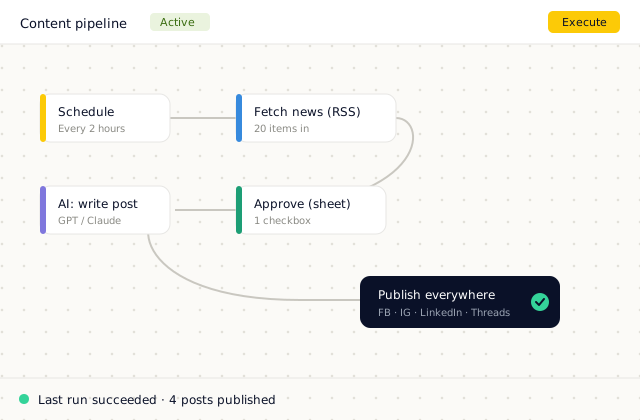
A rebuilt, monitored automation replacing the Zap that kept silently failing.
Results
Why teams hand their broken Zaps to us
n8n
Self-hosted builds that escape per-task caps
We move you off per-task pricing where it makes sense, so scaling volume no longer triggers surprise overages or forced plan jumps.
Alerts
On every workflow, from day one
Alerting is built in from day one, so failures surface immediately instead of compounding silently for weeks.
Support
We fix API breaks, not you
We own the fix when a vendor API changes, so your team stops being the unpaid maintenance crew for its own automations.
FAQ
Questions we get asked.
0
Silent failures you find out about weeks late
Stop losing revenue to
an unanswered phone.
Send us the automations that keep failing. We will map where they break and show you what a production rebuild looks like, no obligation.
Or email aditya@tryagentikai.com